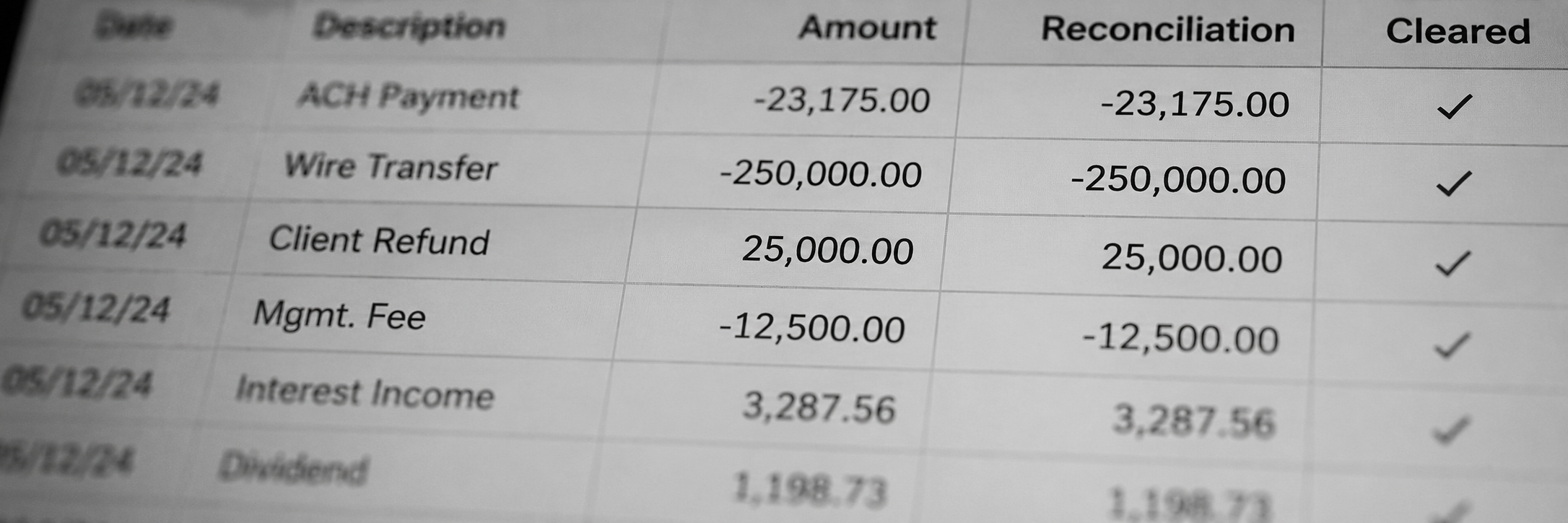
The month-end report lands in your inbox. Most owners scroll to the bottom line, check whether net income is up or down from last month, and close the tab. That number is real, but it's also the least informative line on the page. Everything interesting happened above it.
Here's a different order for reading your month-end numbers — one that catches problems earlier and tells you more about what's actually going on.
Start with gross margin, not net income
Gross margin is revenue minus the direct cost of delivering your product or service, divided by revenue. It tells you whether the core business model is working — before rent, salaries, software, and every other overhead decision you've already made obscures the picture.
Net income reflects both the business model and the business decisions layered on top of it. A month with low net income could mean you hired someone, moved offices, or bought equipment. A month with low gross margin means something structural is wrong: pricing is off, a supplier cost increased, or you're undercharging a particular segment of your client base.
The question gross margin answers is: for every dollar you bring in, how much is left before you start paying for the business itself? If that number is declining, the overhead discussion is premature. Fix the margin first.
In a services business, gross margin is primarily a pricing and utilization question. In a product business, it's a COGS and procurement question. Either way, watching it month over month — not just year to date — tells you where the trend is headed before it shows up in net income.
Then look at the AR aging, not the rest of the balance sheet
The full balance sheet is useful quarterly. The AR aging is useful every month.
The aging report tells you how old your outstanding invoices are: current, 30 days, 60 days, 90-plus days. The current and 30-day buckets are normal. The 60-day bucket needs attention. The 90-plus bucket is where cash has quietly walked out the door without anyone formally deciding it was gone.
Most owners treat overdue invoices as a collections problem. They're usually a relationship problem — a client who is unhappy, confused about what they owe, or quietly going through their own cash crisis. A phone call at 60 days resolves most of them. An email at 90 days resolves very few.
The balance sheet will eventually reflect a bad debt write-off. The AR aging gives you a six-week window to prevent it.
Compare to the prior month, not the budget
Annual budgets are built in November or December with assumptions that are already stale by February. By May, the market has shifted, a client has churned, or a hire came in two months late. The budget line is not a useful benchmark for understanding what happened last month.
Month-over-month comparison is more honest: is revenue up or down from last month, and why? Is gross margin expanding or contracting? Is the operating expense run rate changing? These comparisons tell you about the trend in real time, not against a projection that was a best guess eight months ago.
Year-over-year is the other useful comparison, specifically for businesses with seasonal patterns. A May that looks worse than April might be completely normal if last May looked the same. The budget won't tell you that. A prior-year comparison will.
What net income actually tells you
Net income is the residual after every decision the business has made has been accounted for. It is the last number to look at because everything above it explains it. A net income that doesn't match your expectations is almost always explained somewhere in gross margin, operating expenses, or the AR aging — not in itself.
The P&L is designed to be read top to bottom, not bottom up. The sequence is intentional: revenue, then what it cost to generate it, then what it cost to run the business, then what's left. Reading it in reverse order — net income first — skips the context that makes the number meaningful.
If the month-end report is landing in your inbox but not actually informing decisions, that's usually a presentation problem as much as a data problem. A short call is a fast way to figure out which.